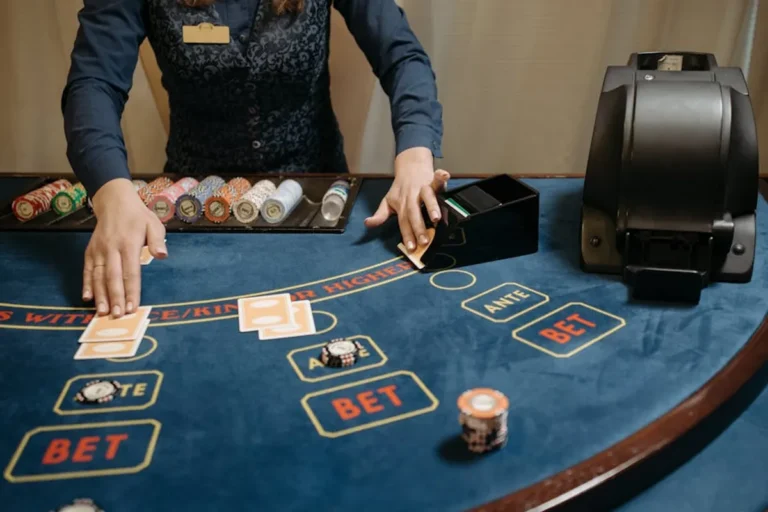

Understanding the concept of house edge is fundamental for anyone engaging with casino games, whether for casual entertainment or strategic play. It represents the built-in mathematical advantage that casinos hold over players in the long run, ensuring their profitability. For players, grasping house edge is not about guaranteeing wins, but about making informed decisions, managing expectations, and understanding the true cost of entertainment across different games. This metric directly influences your potential long-term returns and helps frame realistic outcomes for your gaming sessions. Choosing games with a lower house edge can significantly impact your overall experience and potential for longer play sessions by selecting lower house edge games.
Defining the Casino's Inherent Advantage
House edge is a statistical measure, expressed as a percentage, that indicates the average portion of each wager a casino expects to retain over an extended period. It is not a reflection of what you will lose on any single bet or session, but rather the theoretical profit margin the casino generates from all wagers placed on a specific game over millions of hands, spins, or rolls. For example, a game with a 2% house edge implies that for every $100 wagered collectively by players, the casino anticipates keeping $2 as profit, with the remaining $98 returned to players in wins.
This advantage is meticulously designed into the game rules, payouts, and probabilities. It covers the casino's operational costs, including staff, facilities, and technology, while also generating a profit. Without a house edge, casinos would not be sustainable businesses. For players, recognizing this inherent advantage is crucial for setting a budget, selecting games, and developing a realistic perspective on potential outcomes.
Calculating and Interpreting House Edge
The house edge is derived from the difference between the true odds of an event occurring and the payout odds offered by the casino. Casinos offer payouts that are slightly less than the actual probability of winning, creating that statistical advantage. While the precise calculation can be complex, involving probability distributions and expected values, the result is always a clear percentage.
Consider a simple example: a coin flip where you bet on heads. True odds are 1:1 (50% chance). If the casino paid out at 1:1, there would be no house edge. However, if the casino paid slightly less, say $0.95 for every $1 bet on heads, while still taking your $1 on tails, that difference creates the edge. In most complex casino games, this difference is embedded in the specific rules, card distributions, dice outcomes, or slot machine pay tables.
House Edge Across Popular Casino Games
The house edge varies significantly from one game to another, and even within the same game based on specific rules or player strategy. Understanding these differences allows for more informed game selection.
- Blackjack: Often boasts one of the lowest house edges, typically ranging from 0.5% to 2% when played with optimal strategy. Variations in rules, like the number of decks or specific payout structures, can influence this figure.
- Roulette: The house edge here is determined by the number of zeros on the wheel. European Roulette, with a single zero, has a house edge of 2.7%. American Roulette, featuring both a single and double zero, nearly doubles the edge to 5.26%, making it a less favorable option for players focused on minimizing the house's advantage.
- Baccarat: Known for its relatively low house edge. The Banker bet typically carries an edge of about 1.06%, while the Player bet is around 1.24%. The Tie bet, though offering higher payouts, comes with a significantly higher house edge, often over 14%.
- Craps: This dice game presents a range of house edges depending on the specific bet. The Pass Line and Don't Pass Line bets, when backed up with "Odds" bets (which have no house edge), can result in a combined house edge well under 1%. Other proposition bets, however, can have edges exceeding 10%.
- Slot Machines: These games exhibit the widest range of house edges, often expressed as Return to Player (RTP) percentage, which is simply 100% minus the house edge. RTP can vary from 85% to over 98%, meaning a house edge from 2% to 15% or more. The specific RTP for a slot machine is usually found within its information or paytable section.
Factors Influencing the House's Advantage
Several elements contribute to or modify the house edge in casino games:
- Game Rules: Small rule variations can significantly alter the house edge. For instance, in blackjack, whether a dealer hits or stands on soft 17, or the payout for a natural blackjack, impacts the edge.
- Player Strategy: For skill-based games like blackjack or video poker, playing with optimal strategy (i.e., making the mathematically correct decision in every scenario) is crucial to achieving the lowest possible house edge. Deviating from optimal strategy increases the edge against the player.
- Bet Type: As seen in craps and baccarat, different wagers within the same game carry different house edges. Understanding which bets are more favorable is a key strategic decision.
- Number of Decks: In blackjack, fewer decks generally result in a slightly lower house edge, though this effect is often marginal.
Pro Tip: Do not confuse house edge with short-term variance. While the house edge guarantees the casino a profit over millions of plays, individual sessions can still result in significant player wins or losses due to luck. The house edge is a long-term statistical average, not a session-by-session prediction.
Strategic Considerations for Players
Understanding house edge empowers players to make more informed choices:
- Game Selection: Prioritize games known for their lower house edges if your goal is to maximize potential play duration or theoretical returns. Blackjack (with strategy), baccarat (Banker bet), and certain craps bets are generally more favorable than American Roulette or high-edge slot machines.
- Strategy Implementation: For games where player decisions matter, commit to learning and applying optimal strategy. This directly reduces the house's advantage and improves your theoretical chances.
- Bankroll Management: Acknowledging the house edge helps in setting realistic budgets and understanding that losses are statistically expected over time. Manage your bankroll based on this reality, playing for entertainment rather than guaranteed profit.
- Bonus Terms: When using casino bonuses, be aware that wagering requirements often favor games with higher house edges for contribution, or exclude low-edge games entirely, to protect the casino's profitability.
Navigating Game Selection with House Edge in Mind
The house edge is a fundamental concept that governs the profitability of casino operations and the long-term expectations for players. It is not designed to prevent individual wins, but to ensure the casino's financial viability over time. For players, integrating an understanding of house edge into their gaming approach allows for more deliberate decisions about which games to play, how to play them, and how to manage their funds. While luck will always play a role in short-term outcomes, a grasp of the house edge provides a clearer picture of the mathematical realities at play, allowing you to optimize your entertainment value and manage your risk effectively.
Frequently Asked Questions
What is considered a good house edge for a casino game?
A house edge below 2% is generally considered good, especially in games where player strategy can further reduce it. Games like blackjack (with optimal strategy), baccarat (Banker bet), and certain craps bets often fall into this category, offering more favorable theoretical returns.
Does the house edge ever change during gameplay?
The fundamental house edge of a specific game, based on its rules and payouts, remains constant. However, a player's effective house edge can change based on their decisions. For instance, in blackjack, deviating from optimal strategy immediately increases the house edge against that player.
How does house edge relate to Return to Player (RTP)?
House edge and Return to Player (RTP) are inverse concepts. RTP is the percentage of all wagered money a game is expected to pay back to players over time, while house edge is the percentage the casino expects to keep. Therefore, RTP = 100% - House Edge. For example, a game with a 96% RTP has a 4% house edge.
Can players ever truly beat the house edge?
In the long run, the house edge ensures the casino's profitability. While skilled players in certain games (like card counters in blackjack) can temporarily gain an advantage, for the vast majority of players and games, the house edge is mathematically insurmountable over extended play. Short-term wins are always possible due to variance, but the statistical advantage remains with the house.