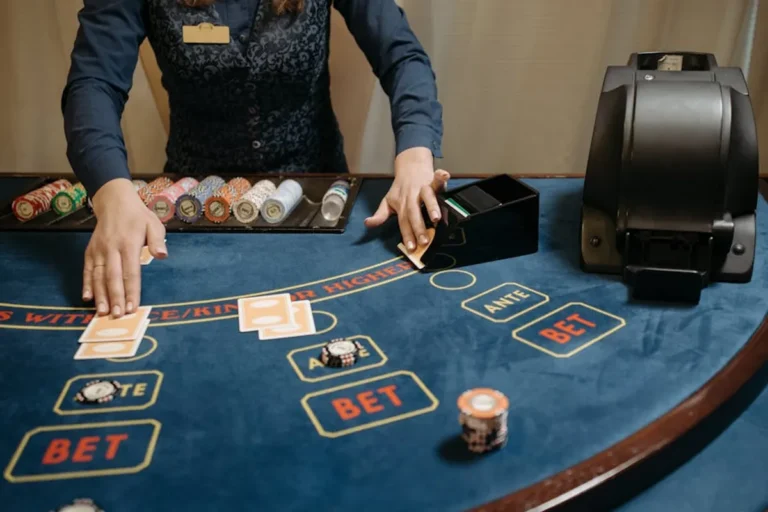

Understanding poker casino games requires distinguishing between the player-versus-player formats, where the house generates revenue via a rake, and player-versus-house table games, where players compete directly against the dealer with a built-in house edge. For publishers and marketers, this distinction is fundamental to crafting targeted content and understanding player motivations. Each variant offers unique strategic depth, payout structures, and player appeal, influencing the type of informational and commercial content that resonates most effectively.
Distinguishing Player-Versus-Player and Player-Versus-House Poker
The term "poker casino games" encompasses a broad spectrum, but a primary division exists in how the game is structured relative to the casino. This impacts everything from game mechanics to player psychology and, consequently, content strategy.
Player-Versus-Player Poker Formats
These are the traditional poker games most people envision, where players compete against each other, not the casino. The casino's role is to facilitate the game, providing dealers, tables, and a secure environment, for which it collects a small percentage of each pot (the "rake") or charges a tournament entry fee. The skill element is paramount, as players vie to outmaneuver opponents rather than overcome a static house advantage.
- Texas Hold'em: The most popular poker variant globally, characterized by two hole cards and five community cards. Its widespread recognition makes it a high-volume search topic for rules, strategy, and tournament play.
- Pot-Limit Omaha (PLO): Similar to Hold'em but players receive four hole cards and must use exactly two of them with three community cards. This leads to more action and higher variance, appealing to a different segment of strategic players.
Content for these formats often focuses on advanced strategy, odds calculation, hand analysis, and tournament preparation, catering to an audience seeking to improve their game and gain an edge over other human opponents.
Player-Versus-House Poker Table Games
In contrast, these games involve players making wagers against the dealer or the house. While they use poker hand rankings, the objective is to beat the dealer's hand, not other players. The casino employs a mathematical edge to ensure profitability over the long term, making these games more akin to blackjack or baccarat in their operational model.
Best for: Players seeking a faster pace, simpler decision-making, and often the potential for progressive jackpots without the psychological demands of playing against other people.
Key Poker Casino Game Variants for Content Strategy
Understanding the specific mechanics of popular player-versus-house variants is crucial for developing accurate and engaging content.
Three Card Poker
This game is valued for its simplicity and speed. Players make an "Ante" wager and can also place a "Pair Plus" side bet. They receive three cards and decide whether to fold or make a "Play" wager equal to the Ante. The dealer must have a Queen-high or better to "qualify." If the dealer doesn't qualify, the player wins the Ante, and the Play bet pushes. If the dealer qualifies, the higher hand wins.
Pro Tip: For content creators, emphasizing the optimal strategy in Three Card Poker—to play any hand Queen-6-4 or better—provides immediate value to players and addresses a common search query. This simple threshold helps players minimize the house edge effectively.
Caribbean Stud Poker
A five-card stud variant where players compete against the dealer. Players make an Ante bet and receive five cards, while the dealer receives five cards with one exposed. Players then decide to fold or raise (typically double the Ante). The dealer must have at least Ace-King high to qualify. A significant draw for this game is often a progressive jackpot side bet, which pays out for rare hands like a Royal Flush.
Pai Gow Poker
This game uses a 52-card deck plus one joker (which can act as an Ace or complete a straight/flush). Players are dealt seven cards and must arrange them into two hands: a five-card "high" hand and a two-card "low" hand. The five-card hand must rank higher than the two-card hand. The objective is to beat both of the dealer's hands. If both hands win, the player wins. If both lose, the player loses. If one wins and one loses, it's a push.
Strategic Element: The "setting" of the two hands is critical, offering a depth of strategy that appeals to players who enjoy tactical decision-making.
Navigating Player Strategy and House Edge
For player-versus-house games, the "house edge" is the casino's built-in advantage, expressed as a percentage of the initial wager. This edge varies by game and even by specific rules within a game. Content that transparently explains the house edge and outlines optimal strategy helps players make informed decisions, fostering trust and engagement. While players cannot eliminate the house edge, they can minimize it by adhering to mathematically sound strategies.
For example, knowing when to hit, stand, or split in blackjack, or when to fold or raise in Three Card Poker, directly impacts the long-term return to player (RTP). Providing clear, concise strategy guides for each game variant is a cornerstone of valuable content in this niche.
Strategic Content Development for Poker Casino Games
Developing authoritative content around poker casino games requires a dual focus: accurately explaining game mechanics and addressing the commercial intent of players. Content should cater to both beginners seeking basic rules and experienced players looking for advanced strategies or ways to optimize their play.
Consider creating content clusters around:
- Rules and How-to-Play Guides: Essential for new players, covering basic gameplay, betting rounds, and hand rankings for each variant.
- Strategy Guides: From beginner tips to advanced optimal strategies, including discussions on odds, probabilities, and decision trees.
- Glossaries of Terms: Explaining specific poker terminology relevant to each game.
- Responsible Gaming Resources: Integrating information about bankroll management and safe play practices, which builds trust and fulfills ethical obligations.
- Variant Comparisons: Helping players choose the best game for their preferences and skill level.
Practical Insights for Publishers
The commercial viability of content related to poker casino games hinges on precision and relevance. Publishers must differentiate between the strategic depth of player-versus-player poker and the more accessible, house-edged nature of player-versus-house table games. Each category demands distinct content angles and keyword targeting. By focusing on clear explanations, actionable strategies, and an understanding of player motivations—whether for skill development or entertainment—content can effectively capture and retain an engaged audience. Accuracy in rules, payout structures, and strategic advice is paramount to establishing authority and becoming a trusted resource in this competitive landscape.
Frequently Asked Questions
What is the primary difference between traditional poker and casino poker games?
Traditional poker (player-versus-player) involves competing against other players, with the casino taking a rake from the pot. Casino poker games (player-versus-house) involve competing against the dealer, where the casino has a built-in mathematical advantage, known as the house edge.
Which poker casino games are generally considered easiest to learn for beginners?
Games like Three Card Poker and Ultimate Texas Hold'em are often recommended for beginners due to their simpler rule sets and fewer decision points compared to traditional poker variants or Pai Gow Poker.
Do all poker casino games have a house edge?
Yes, all player-versus-house poker casino games are designed with a house edge to ensure the casino's long-term profitability. The exact percentage varies by game and specific rules.
How important is strategy in player-versus-house poker games?
Strategy is crucial in minimizing the house edge in player-versus-house games. While it cannot eliminate the casino's advantage, optimal strategy ensures players make the mathematically correct decisions, thereby maximizing their return over time.