
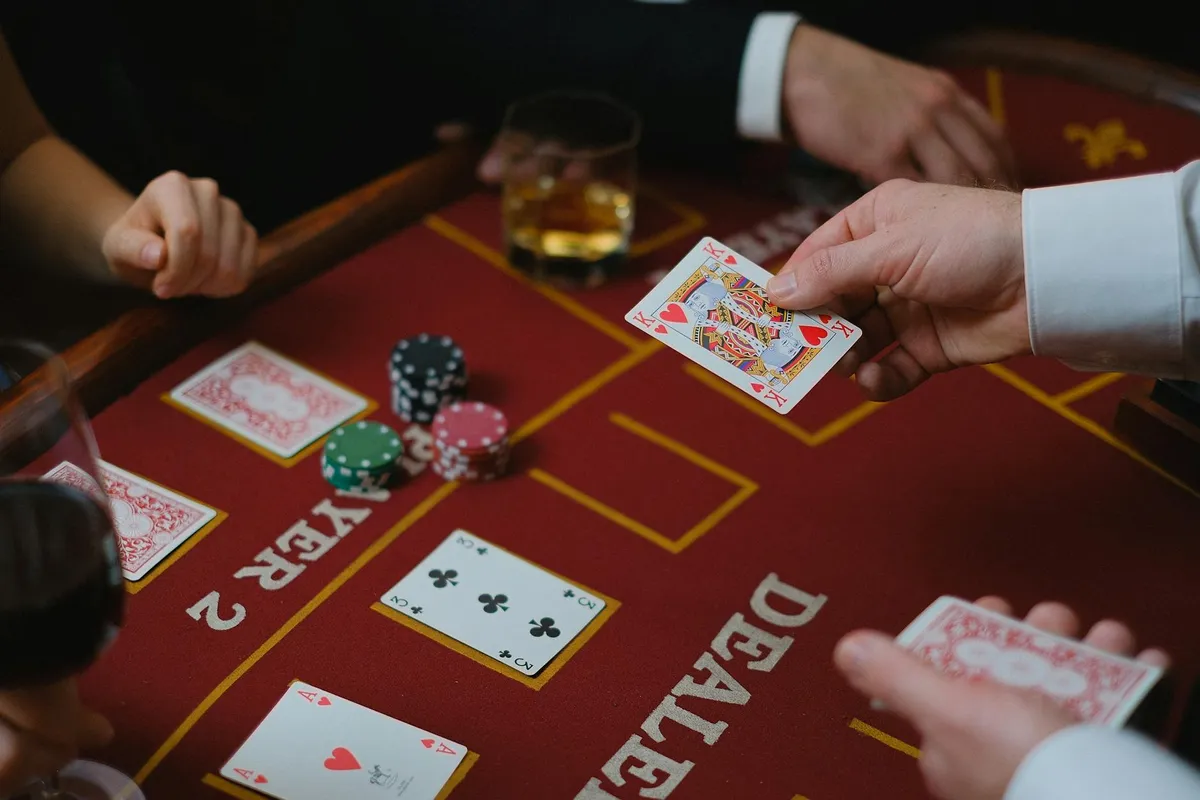
Blackjack has substantial history extending across centuries through specific game evolution. The contemporary game emerged from substantial development across multiple cultures, mathematical refinement, and specific institutional adaptation. Understanding the history clarifies substantial portions of what blackjack actually is as cultural and mathematical artifact.
This essay attempts to examine blackjack history with the care it warrants. The reading rewards sustained attention to multiple historical and cultural layers.
The probable origins
Blackjack's probable origins involve specific card game evolution:
Spanish "veintiuno" (twenty-one) appears in early seventeenth century literature including Cervantes' work.
French "vingt-et-un" developed in eighteenth century French gaming establishments.
Italian and other European variations contributed to specific game elements.
The game spread substantially through European gaming culture across eighteenth century.
Specific origins remain partly speculative; documented appearances begin in seventeenth century.
The probable origins involve substantial European cross-cultural development.
The American adaptation
American blackjack development has specific characteristics:
The game spread to America through European immigration patterns.
Specific American adaptation included the "blackjack" bonus payout for ace-and-jack-of-spades hands that gave game its name.
American gambling culture across nineteenth century included substantial blackjack play.
The game became staple of American casino culture through twentieth century.
Specific Las Vegas casino development incorporated blackjack as central game.
The American adaptation produced what became dominant contemporary blackjack form.
The mathematical analysis era
Twentieth-century mathematical analysis transformed understanding of blackjack:
Roger Baldwin et al. published "The Optimum Strategy in Blackjack" in 1956 providing first substantial mathematical analysis.
Edward Thorp's "Beat the Dealer" in 1962 substantially developed analysis including card counting techniques.
Subsequent mathematical refinement across decades produced substantial blackjack mathematical literature.
Computer simulation enabled detailed analysis previously impossible.
Multiple counting systems were developed and refined.
The mathematical analysis transformed the game's relationship to skill versus chance.
The card counting development
Card counting represents substantial mathematical achievement:
Thorp's original "Ten Count" system was first popular counting method.
Subsequent systems (Hi-Lo, KO, Hi-Opt I and II, others) provided different complexity-versus-effectiveness tradeoffs.
The mathematical foundation involves tracking specific cards remaining in deck to calculate when remaining composition favors player.
When favorable, increased betting captures positive expected value.
When unfavorable, minimum betting limits loss exposure.
The mathematics is sound but requires substantial skill for practical application.
Casinos developed substantial countermeasures over decades affecting practical card counting.
The casino response
Casino response to mathematical analysis substantially shaped modern blackjack:
Specific rule variations introduced reducing player advantage from basic strategy.
Multiple deck games introduced making card counting harder.
Continuous shuffling machines introduced making card counting impossible.
Specific casino practices including back-off (asking suspected counters to leave) developed.
Specific surveillance technology developed to identify card counters.
The arms race between players and casinos has continued across decades.
Modern casino blackjack reflects substantial accommodation between mathematical analysis and casino response.
The basic strategy refinement
Basic strategy has specific characteristics:
Specific play decisions optimal for each hand against each dealer up-card.
Mathematical derivation through substantial computation.
Specific variation by rule set.
Reduces house edge to approximately 0.5% with most modern rule sets.
Achievable through study and practice without unusual skill.
Represents substantial mathematical achievement converted to practical playing tool.
Substantive players use basic strategy as foundation regardless of additional techniques.
The advantage play tradition
Substantial advantage play tradition has developed:
Card counting represents most studied advantage technique.
Hole carding (observing dealer hole cards in specific game configurations) represents another technique.
Shuffle tracking represents technique exploiting non-random shuffling patterns.
Specific tournament strategy differs from cash game strategy.
Specific other techniques have been developed and refined.
The advantage play tradition represents substantial intellectual achievement.
Practical application requires substantial skill development.
The cultural dimension
Blackjack has substantial cultural dimension:
Substantial place in American gambling culture.
Specific representation in literature, film, and television.
Specific iconic moments in popular culture.
Substantial role in casino aesthetic and casino floor design.
Specific cultural associations with skill, sophistication, and intellectual approach to gambling.
The cultural dimension affects how the game is perceived and played.
The MIT Blackjack Team era
Specific historical period warrants attention:
MIT Blackjack Team operated card counting team play across multiple years.
Substantial profits documented through specific skilled team play.
Subsequent book "Bringing Down the House" substantially documented operations.
Subsequent film adaptation brought story to broader audiences.
Team play represented evolution of card counting from individual to coordinated activity.
Casino countermeasures eventually limited team play effectiveness substantially.
The era illustrates how mathematical analysis can produce real-world advantage when sustained.
The contemporary game
Modern blackjack has specific characteristics:
Substantial rule variations across casinos.
Specific games designed to limit advantage play.
Online blackjack with specific advantages and disadvantages versus physical games.
Specific live dealer online formats combining elements.
Continued substantial popularity in casinos and online.
Continued evolution of specific rule variations.
The contemporary game reflects substantial accumulated history while continuing to evolve.
The mathematical literature
Substantial mathematical literature on blackjack exists:
Thorp's "Beat the Dealer" remains foundational.
Edward Griffin's "Theory of Blackjack" provides comprehensive mathematical treatment.
Don Schlesinger's "Blackjack Attack" provides substantial advanced material.
Specific computer-simulation-based works provide practical analysis.
Substantial periodical literature exists for serious students.
The mathematical literature represents substantial intellectual achievement worth substantive engagement.
What blackjack history teaches
The history teaches specific things:
Substantial games can emerge from substantial cross-cultural development across centuries.
Mathematical analysis can substantially transform understanding of established games.
Casino-player dynamics produce specific evolution patterns.
Substantive intellectual work continues to refine understanding.
Cultural and mathematical dimensions interact substantially.
The history rewards substantive engagement.
What this means for players
For blackjack players:
Basic strategy is substantial mathematical achievement worth learning.
Card counting represents legitimate advanced skill though practical application is difficult.
Specific rule variations matter substantially for game economics.
Casino game selection within blackjack offerings matters.
Substantive study rewards substantive players.
Recreational play benefits from at least basic strategy understanding.
What this means for understanding casino games
For broader casino game understanding:
Blackjack illustrates how substantive mathematical analysis can transform understanding of games.
The history shows how casino-player dynamics evolve across decades.
The cultural dimension shows how mathematical and cultural factors interact.
The mathematical literature provides model for serious study of casino games generally.
The game offers substantial case study worth engagement.
Methodological caveats
Several caveats apply:
Specific historical details remain partly speculative.
Cross-cultural origins are difficult to trace precisely.
Specific contemporary practices vary substantially across casinos.
Mathematical literature continues to develop.
Specific analysis applies to specific game configurations.
What sustained attention reveals
The patient examination reveals:
Substantial historical depth behind contemporary game.
Substantial mathematical achievement in game analysis.
Substantial cultural dimension affecting how game is perceived and played.
Substantive intellectual material worth ongoing engagement.
Specific lessons for understanding casino games generally.
The game rewards substantive attention beyond promotional treatment.
The honest conclusion
Blackjack has substantial history extending across centuries through specific game development.
The mathematical analysis transformed understanding across twentieth century.
The casino response produced ongoing arms race shaping contemporary game.
Substantial cultural dimension affects how game is perceived and played.
For substantive understanding: sustained engagement with history rewards engagement.
For players: substantive study produces better play.
For everyone interested in casino games: blackjack offers substantial case study.
The history continues. The game continues to evolve. The substantive analysis warrants continuing.
That is the case for sustained engagement with blackjack history rather than reduction to promotional treatment.