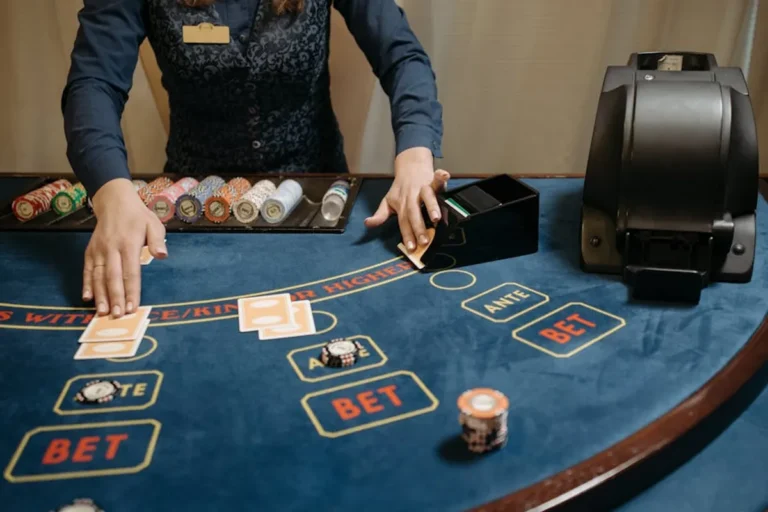

Blackjack, often perceived as a game of pure chance, fundamentally transforms into a strategic exercise when players apply mathematically sound decisions. Understanding basic strategy is not about guaranteeing wins, but about minimizing the casino's inherent advantage, known as the house edge. This disciplined approach shifts the odds closer to even, allowing for extended play and more informed decisions over time. For any analytical professional, approaching blackjack with a data-driven mindset is the only viable path to consistent performance, much like optimizing any other system.
The Foundational Principles of Basic Strategy
Basic strategy in blackjack is a set of optimal decisions for every possible hand combination against every possible dealer upcard. These decisions are derived from extensive probability calculations, ensuring that each move maximizes your long-term expected value. Adhering to this strategy does not eliminate the house edge entirely, but it typically reduces it to between 0.5% and 1% in most standard games, a significant improvement over intuition-based play.
Key Decisions in Basic Strategy
Each decision in blackjack carries a specific mathematical implication. Understanding when and why to execute these moves is central to strategic play.
- Hit: Take another card. This is appropriate when your hand total is low enough that another card is unlikely to bust you, and your current total is weak against the dealer's upcard. For example, always hit if your hand is 11 or less, as you cannot bust on the next card.
- Stand: Take no more cards. This is usually done when your hand total is strong enough to risk the dealer improving, or when taking another card carries a high risk of busting. For instance, always stand on a hard 17 or higher.
- Double Down: Double your initial bet and receive exactly one more card. This move is reserved for situations where you have a strong advantage, typically with a hand total of 9, 10, or 11 against a dealer's weak upcard (like a 2 through 6). The increased wager capitalizes on favorable odds.
- Split: If you are dealt two cards of the same rank (a pair), you can split them into two separate hands, placing an additional bet equal to your original wager on the second hand. This move is highly advantageous for certain pairs. Always split Aces and 8s, as these significantly improve your chances of winning both hands. Never split 10s or 5s.
- Surrender: Forfeit half your original bet and end the hand. This option is available in some casinos and is used when your hand is extremely poor against a strong dealer upcard, minimizing your loss. For example, surrender a hard 16 against a dealer's 9, 10, or Ace.
Impact of Table Rules on Strategy
While basic strategy provides a robust framework, specific table rules can subtly alter optimal play. Variations in rules directly influence the house edge and necessitate minor adjustments to the standard strategy chart. Key rule differences include:
- Dealer Hits or Stands on Soft 17 (H17 vs. S17): If the dealer hits on a soft 17 (H17), the house edge increases by approximately 0.22%. This requires slight adjustments, such as hitting on soft 18 against a dealer's Ace or 2.
- Blackjack Payout (3:2 vs. 6:5): A 3:2 payout for blackjack is standard and favorable. A 6:5 payout significantly increases the house edge by about 1.4%, making the game less desirable. Avoid 6:5 tables whenever possible.
- Re-splitting Aces: The ability to re-split Aces reduces the house edge. Some casinos allow this, others do not.
- Number of Decks: Fewer decks generally reduce the house edge. A single-deck game has a lower house edge than an eight-deck game, assuming all other rules are equal.
Pro Tip: Always avoid side bets and the "insurance" option. Insurance, offered when the dealer shows an Ace, is a separate wager that the dealer has blackjack. Mathematically, it is a poor bet with a high house edge (around 5.8% in a typical game), regardless of your hand. Focus solely on your main hand and basic strategy to maintain the lowest possible house edge. Understanding the casino game return to player is key to recognizing why these side wagers are so unfavorable.
Bankroll Management for Sustained Play
Effective bankroll management is as critical as basic strategy for any long-term player. It involves setting a budget for your play and adhering to it, protecting your capital from statistical variance. A common approach is to allocate a specific amount for each session and determine a unit size for your bets that represents a small fraction of your total bankroll (e.g., 1-2%). This prevents rapid depletion of funds during losing streaks, allowing you to remain in the game for the long run and benefit from the cumulative effect of correct strategic decisions.
Implementing Foundational Blackjack Strategy
Mastering basic strategy requires memorization and consistent application. Strategy charts, widely available online and in print, provide a visual guide for every decision. Begin by studying these charts, focusing on understanding the logic behind each move rather than rote memorization alone. Practice sessions, initially without real money, help internalize the decisions. Many online platforms offer free-play versions of blackjack where you can test your knowledge and build confidence before playing with real stakes. The goal is to make basic strategy second nature, allowing you to react quickly and correctly under pressure.
Frequently Asked Questions
What is the primary benefit of using basic strategy?
The primary benefit is significantly reducing the house edge, which means you lose less money over the long term and have a greater chance of extending your playtime and achieving winning sessions.
Is basic strategy card counting?
No, basic strategy is distinct from card counting. Basic strategy involves making optimal decisions for each hand based on known probabilities, without tracking specific cards. Card counting is an advanced technique that involves tracking the ratio of high to low cards remaining in the deck to determine when the player has a statistical advantage.
Can I still lose money using basic strategy?
Yes, absolutely. Blackjack remains a game of chance, and short-term variance means you can experience losing streaks even when playing perfectly. Basic strategy optimizes your long-term odds, but it does not guarantee wins on every hand or session.
Where can I find a reliable basic strategy chart?
Numerous reputable sources, including gambling strategy websites and books, provide accurate basic strategy charts. Ensure the chart you use matches the specific rules of the blackjack game you are playing (e.g., dealer hits or stands on soft 17).