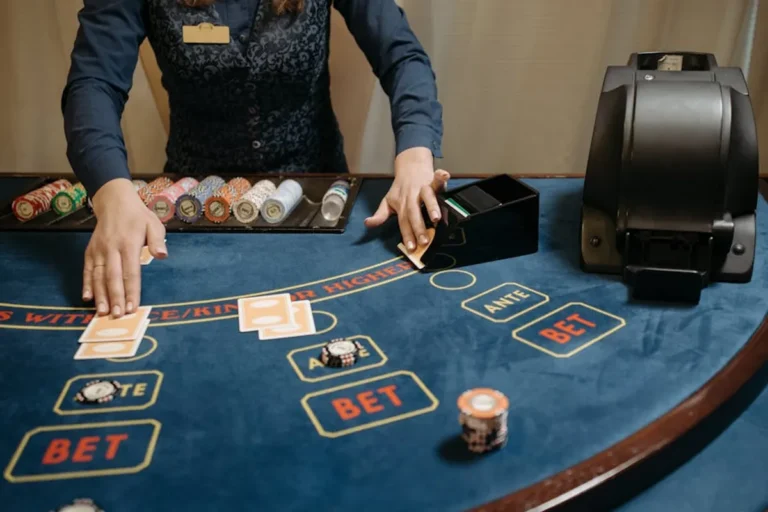

Navigating the array of casino games can be daunting for newcomers. The objective for a beginner isn't to master complex strategies or chase high-stakes jackpots, but rather to understand fundamental game mechanics, manage expectations regarding odds, and enjoy the experience without significant financial risk. The games best suited for those new to the casino environment prioritize clear rules, straightforward decision-making, and often allow for lower-stakes play. This approach helps build confidence and familiarity, setting a solid foundation before exploring more intricate options. Understanding the core appeal and potential pitfalls of each game type is crucial for making informed choices as a new player in 2026. This approach helps build confidence and familiarity, setting a solid foundation before exploring more intricate options, especially with lower house edge games.
What to Look For in a Beginner-Friendly Casino Game
When selecting your initial casino games, prioritize transparency and control. A beginner-friendly game should have rules that are easily grasped within a few minutes, avoiding convoluted betting structures or multi-stage decision trees. Look for games where the impact of your decisions is clear, rather than relying solely on chance or hidden mechanics. Games with a lower house edge, even if requiring basic strategy, offer better long-term value. Furthermore, the ability to play at low minimum bets allows for extended playtime and learning without significant capital outlay. Finally, consider games where the pace of play is moderate, allowing time to think and react, rather than being rushed into decisions.
1. Blackjack
Blackjack stands as a cornerstone of casino gaming, highly regarded for its blend of simplicity and strategic depth. The objective is clear: achieve a hand total closer to 21 than the dealer, without exceeding 21. Its appeal to beginners lies in the direct interaction with the dealer and the immediate feedback on decisions to "hit" (take another card) or "stand" (keep current cards). Basic strategy charts, widely available, significantly reduce the house edge to one of the lowest in the casino, making it a game where informed play demonstrably improves outcomes.
Best for: Players who enjoy a blend of luck and simple decision-making, and are willing to learn basic strategy to improve their odds.
Pros:
- Easy-to-understand objective and core rules.
- Basic strategy significantly lowers the house edge, offering better player value.
- Player decisions directly influence the outcome, providing a sense of control.
- Widely available at various stake levels, suitable for small bankrolls.
Cons:
- Requires memorization of basic strategy for optimal play, which can be a small initial hurdle.
- Fast-paced tables can pressure new players into quick decisions.
- Side bets often have a significantly higher house edge and should be avoided by beginners.
Verdict: Blackjack is an excellent starting point for beginners willing to invest a small amount of time learning basic strategy. Its low house edge and interactive nature provide a rewarding introduction to strategic casino play.
2. Roulette
Roulette is an iconic game of pure chance, centered around a spinning wheel and a ball. Its beginner-friendliness stems from its incredibly simple premise: bet on where the ball will land. Players choose numbers, colors, or groups of numbers on a betting layout. The variety of betting options, from high-payout single numbers to even-money red/black or odd/even bets, allows beginners to start with very low-risk propositions. European Roulette, with its single zero, offers slightly better odds than American Roulette's double zero, making it the preferred version for new players.
Best for: Players who prefer straightforward chance-based games with clear outcomes and a wide range of betting choices, especially those looking for even-money bets.
Pros:
- Extremely simple rules and gameplay; no strategy required beyond choosing a bet.
- Wide range of betting options, including low-risk, nearly 50/50 bets (e.g., Red/Black).
- Engaging and social atmosphere, often a central point in physical casinos.
- Easy to understand payouts for different bet types.
Cons:
- The house edge is fixed and relatively high (2.7% for European, 5.26% for American), regardless of the chosen bet type.
- Can be fast-paced, particularly in online live dealer settings, requiring quick bet placement.
- No skill or strategy component to influence outcomes, purely luck-based.
Verdict: Roulette is ideal for beginners seeking a pure gambling experience with minimal learning curve. Sticking to outside bets (Red/Black, Odd/Even, High/Low) on a European wheel provides the best initial experience.
3. Baccarat (Punto Banco)
Baccarat, particularly the Punto Banco variant, is surprisingly simple despite its sophisticated reputation. Players bet on one of three outcomes: "Player," "Banker," or "Tie." The dealer handles all card drawing rules, making player decisions minimal once a bet is placed. The "Banker" bet, despite a small commission, offers one of the lowest house edges in the casino, making it a statistically sound choice for beginners. Its elegance and straightforwardness make it highly accessible.
Best for: Players seeking a game with a very low house edge and no strategic decisions required after placing a bet, ideal for those who prefer observation over active participation.
Pros:
- Extremely simple gameplay; no complex decisions for the player.
- The Banker bet offers one of the lowest house edges in the casino (around 1.06%).
- Fast rounds, allowing for many betting opportunities.
- Often available at various stake levels, including mini-baccarat for lower bets.
Cons:
- The small commission on Banker wins can be confusing initially.
- Tie bets have a very high house edge and should be avoided.
- Lack of player interaction or strategic choice may not appeal to all.
Verdict: Baccarat is an excellent choice for beginners looking for a low house edge and a hands-off playing experience. Focus solely on the Banker bet for the best odds.
4. Slots
Slot machines are the most popular casino game globally, primarily due to their simplicity and immediate gratification. Players insert money, spin reels, and hope for matching symbols across paylines. There's no skill involved; outcomes are determined by a Random Number Generator (RNG). For beginners, simpler 3-reel or classic 5-reel slots with fewer paylines and straightforward bonus features are preferable to avoid overwhelming complexity. The allure of a potentially large payout from a small bet is a significant draw.
Best for: Players who prefer pure chance, minimal interaction, and the excitement of potentially large, instant payouts without any strategic demands.
Pros:
- Absolutely no skill or strategy required; pure entertainment.
- Wide variety of themes, graphics, and bonus features to suit any preference.
- Can be played at very low stakes per spin.
- Instant results and clear visual feedback on wins.
Cons:
- House edge is typically higher than table games, often ranging from 2% to 15% or more.
- Can be highly addictive due to rapid play and potential for big wins.
- Complex bonus rounds and numerous paylines can be confusing on modern video slots.
Verdict: Slots are ideal for beginners seeking pure entertainment and the thrill of a big win without any strategic thought. Start with simpler machines to understand basic mechanics before exploring more complex video slots.
5. Video Poker
Video Poker combines the elements of slot machines with the strategic depth of five-card draw poker. Players are dealt five cards, choose which to hold, and then draw new cards to form the best possible poker hand. The payout structure is based on the final hand ranking, similar to traditional poker. For beginners, games like Jacks or Better are recommended because they have a clear payout table and a relatively simple optimal strategy that, when followed, can lead to a very low house edge, sometimes even exceeding 100% with specific pay tables and bonuses.
Best for: Beginners who enjoy a blend of luck and skill, are willing to learn basic poker hand rankings, and want a game where strategy significantly impacts their return.
Pros:
- Applying optimal strategy can result in one of the lowest house edges in the casino.
- Player decisions directly influence the outcome, offering a sense of control and skill.
- Clear payout tables allow players to understand potential returns for various hands.
- Often available at lower denominations than table poker.
Cons:
- Requires learning basic poker hand rankings and optimal strategy charts for each variant.
- Mistakes in strategy can significantly increase the house edge.
- Can be less social than table games.
Verdict: Video Poker is an excellent choice for beginners who want a game where skill matters and are prepared to learn basic strategy. Jacks or Better is the most accessible starting point.
6. Craps (Pass/Don't Pass Bets)
Craps appears intimidating due to its complex table layout and multitude of betting options, but at its core, it's a simple dice game. For beginners, focusing exclusively on the "Pass Line" or "Don't Pass Line" bets simplifies the game dramatically. These are even-money bets with a very low house edge (1.41% for Pass Line, 1.36% for Don't Pass Line). The game involves players taking turns rolling two dice, and the outcome determines the bets. The energy and camaraderie at a craps table are unique, making it an engaging experience even for passive bettors.
Best for: Players who enjoy a social, high-energy atmosphere and are content to stick to the simplest bets with good odds, without delving into complex propositions.
Pros:
- Pass Line and Don't Pass Line bets offer some of the best odds in the casino.
- Highly social and interactive game, especially in a physical casino.
- The basic premise of rolling dice is easy to understand.
- "Taking Odds" after a Pass/Don't Pass bet has zero house edge.
Cons:
- The table layout and numerous betting options can be overwhelming for beginners.
- Fast pace can lead to confusion and incorrect bets if not careful.
- Other bets on the table have significantly higher house edges and should be avoided by beginners.
Verdict: Craps is a thrilling game for beginners if they limit themselves to the Pass Line or Don't Pass Line bets and consider taking odds. It's a game to observe and learn slowly.
7. Three Card Poker
Three Card Poker offers a simplified version of traditional poker, making it highly accessible for beginners. The game involves playing a three-card hand against the dealer's three-card hand. There are two main betting options: the Ante bet (playing against the dealer) and the Pair Plus bet (betting on receiving a pair or better, regardless of the dealer's hand). The poker hand rankings are simplified to three-card combinations, reducing the complexity significantly. The strategy for the Ante bet is also straightforward: play any hand Queen-high or better.
Best for: Beginners who want an introduction to poker hand rankings and player-versus-dealer dynamics without the complexity of traditional five-card poker or multiple betting rounds.
Pros:
- Simple rules and poker hand rankings (three-card hands).
- Engaging player-versus-dealer format.
- Basic strategy for the Ante bet is easy to learn.
- Fast-paced gameplay, offering many rounds in a short time.
Cons:
- The Pair Plus side bet, while exciting, has a higher house edge.
- No bluffing or complex strategy like traditional poker.
- Can be difficult to find optimal strategy charts for all variations.
Verdict: Three Card Poker is an excellent entry point for beginners interested in poker, offering quick, simple gameplay with a clear strategic element for the main Ante bet.
8. Keno
Keno is a lottery-style game where players select numbers from a range, typically 1 to 80. After selections are made, numbers are drawn randomly, and payouts are determined by how many of the chosen numbers match the drawn numbers. Its appeal for beginners lies in its extreme simplicity and the ability to choose how many numbers to play, impacting potential payouts and odds. There is no strategy involved beyond number selection, making it a purely luck-based game similar to a lottery ticket.
Best for: Players who enjoy lottery-style games, prefer a completely hands-off experience, and are comfortable with a high house edge in exchange for the chance of a large payout from a small bet.
Pros:
- Extremely simple rules; no strategy required.
- Can be played at very low stakes.
- Potential for large payouts from small bets.
- Relaxed pace, allowing players to wait for draws without constant interaction.
Cons:
- One of the highest house edges in the casino, often ranging from 20% to 35% or more.
- Outcomes are entirely random; no skill involved.
- Can be slow-paced between draws, especially in physical casinos.
Verdict: Keno is suitable for beginners who enjoy the thrill of a lottery and are comfortable with very long odds. It's a game for pure entertainment and the slim chance of a big win, not for consistent returns.
9. Pai Gow Poker
Pai Gow Poker is a unique poker variant played with a 53-card deck (including a joker) against a dealer. Players receive seven cards and must arrange them into two separate poker hands: a five-card hand and a two-card hand. The objective is to have both of your hands rank higher than the dealer's corresponding hands. The game is known for its slow pace and strategic element in setting the hands, but it often results in pushes (ties), extending playtime. The "house way" rule, which dictates how the dealer must set their hand, provides a good guideline for beginners.
Best for: Players who enjoy a slower-paced strategic game, are comfortable with basic poker hand rankings, and prefer frequent pushes over rapid wins or losses.
Pros:
- Slow pace of play allows for careful decision-making.
- Frequent pushes mean less volatility and longer playtime for your bankroll.
- Strategic element in setting hands adds depth without being overly complex.
- The Joker acts as an ace or to complete a straight/flush, adding flexibility.
Cons:
- Requires understanding of two-hand poker rankings and strategic hand-setting.
- The concept of "setting the hand" can be confusing initially.
- Commission on winning bets (typically 5%) slightly increases the house edge.
Verdict: Pai Gow Poker is a good option for beginners seeking a strategic, slow-paced game that extends playtime. Learning the "house way" is a solid starting strategy.
10. Sic Bo
Sic Bo is an ancient Chinese dice game played with three dice. Players bet on the outcome of the dice roll, similar to roulette, but with dice instead of a wheel. The betting options range from simple bets like "Big" or "Small" (total of dice 11-17 or 4-10, excluding triples) to specific number combinations and triples. For beginners, focusing on the "Big" or "Small" bets is advisable, as these offer near even-money payouts and are easy to understand. The game is purely luck-based, with no strategy involved once bets are placed.
Best for: Players who enjoy dice games, prefer a purely chance-based experience with a wide variety of betting options, and are comfortable with the house edge.
Pros:
- Simple to understand the core mechanic of betting on dice rolls.
- "Big" and "Small" bets offer nearly even-money payouts.
- Wide range of betting options to suit different risk appetites.
- Fast-paced rounds, providing quick results.
Cons:
- House edge can vary significantly between different bet types, with some having very high edges.
- The betting layout can appear complex due to the sheer number of options.
- No skill or strategy involved to influence outcomes.
Verdict: Sic Bo is a fun, fast-paced dice game for beginners, especially if they stick to the simple "Big" or "Small" bets. It offers a different flavor of pure chance compared to roulette.
11. Dragon Tiger
Dragon Tiger is a simplified version of Baccarat, often found in Asian casinos. It's played with cards, but instead of complex drawing rules, only two cards are dealt: one to the "Dragon" position and one to the "Tiger" position. Players bet on which position will receive the higher card, or if it will be a "Tie." Aces are low, and suits typically don't matter, though some variations use suits as a tie-breaker. Its extreme simplicity makes it one of the easiest card games to learn in a casino.
Best for: Absolute beginners seeking the simplest possible card game with quick rounds and no strategic decisions, ideal for those who find Baccarat still too complex.
Pros:
- Extremely simple rules: higher card wins.
- Fast-paced gameplay, ideal for quick sessions.
- No strategic decisions required from the player.
- Clear and immediate outcomes.
Cons:
- The house edge is relatively high compared to Baccarat's Banker bet (around 3.73% for Dragon/Tiger bets).
- Tie bets have a very high house edge and should be avoided (around 32.77%).
- Lack of depth or strategy may bore some players quickly.
Verdict: Dragon Tiger is the ultimate beginner card game for its unparalleled simplicity and speed. Stick to Dragon or Tiger bets to maintain the best possible odds, despite them being higher than Baccarat's optimal bets.
12. Casino War
Casino War is arguably the simplest card game offered in casinos, directly mimicking the children's game "War." Players and the dealer each receive one card. If your card is higher than the dealer's, you win even money. If the dealer's card is higher, you lose. If there's a tie, you have two options: surrender (lose half your bet) or "go to war" (double your bet and receive another card, as does the dealer). The simplicity is its main draw, with minimal decision-making required.
Best for: Players looking for the absolute simplest casino card game with instant results and minimal rules, ideal for a very quick, low-stakes experience.
Pros:
- The easiest card game to learn; rules are understood instantly.
- Fast-paced, allowing for many rounds in a short time.
- Clear win/loss outcomes.
- Low minimum bets are often available.
Cons:
- Relatively high house edge, especially if you "go to war" on a tie (around 2.87%).
- Virtually no strategy involved beyond the tie decision.
- Can become monotonous quickly due to lack of depth.
Verdict: Casino